Showing posts with label cattle. Show all posts

Wednesday, September 25, 2013

Taylor Short - Missouri Agvocate!

Today we welcome Taylor Short from the Missouri Ozarks. Taylor is passionate about agriculture!
My name is Taylor Short and I am senior majoring in agriculture communications at Missouri State. I am proud to be from Missouri more so from the Missouri Ozarks.


I am a third generation Angus breeder; our family has raised Angus cattle for almost 50 years qualifying us for the distinction of Historic Angus Herd in 2014.

Our farm has been in our family for 5 generations. During the summer I show my cattle at various state and national shows/fairs. this has allowed me to make lifelong friends and awesome memories. I write blogs for I love Farmers they Feed my Soul as the lone catalyst for conversation in Missouri – I love being involved in this movement because it gives everything a new light making it cool to talk about agriculture. I am also involved in Farm Bureau at the local, college, and state level.


A typical day since I am still a student involves learning all I can about agriculture.

I live and breathe agriculture. Agriculture is awesome- I mean where we would be without agriculture. Agriculture is my passion. Therefore it is my goal to be an agvocate for my fellow agriculturists and educate anyone who will listen about who works to provide for their food supply as well as other products that are raised by farmers and ranchers. If we don’t agvocate our “services” then those with less experience will – like the media. As agvocates we want the true story from farm to market to enlighten the consumer. Advocacy needs to be progressive in order to attract consumers and be able to answer their questions.


Agriculture is my passion and I want to share my passion with everybody. I was told if we don't tell our stories someone else will tell our stories. agriculture means the world to me I want people know that.


I run into a lot of misconceptions on certain areas that I think a lot of people just are scared and confused about issues...but the whole telling you story is important.


You find me on acebook The Aggie Hipster and on my blog at http://theaggiehipster.wordpress.com/
I am currently working on a vegetarian diet for 15 days to gain a different view on agriculture.

Thank you Taylor for the work you do and good luck with your vegetarian adventure!
Be sure to follow her blog!

You could be the NEXT feature!! E-mail us at foafeature@gmail.com today to learn more!


Wednesday, August 21, 2013

Greg Lemke - Arkansas Cattle Producer

Today we welcome a post from Jeralyn Stephens of the Beefmasters Breeders United. She has shared with us the story of Greg Lemke a cattle producer from Arkansas. 

Greg Lemke of Gentry, Ark., always had a passion for cattle. However a hog hunting accident in 2007 followed by a layoff as a result of downsizing in Latco in Lincoln, Ark., fine-tuned the passion into a livelihood necessity. Greg found himself wheelchair-bound, out of work and unable to use his engineering design degree but not his intelligence and determination.


Greg has 130 acres on which he runs 50 Beefmaster mommas. Greg is very partial to the Beefmaster breed. Greg said, “I always liked the breed and already had a small cow herd when I was young. Then I talked with a guy who raised Beefmasters. Many years ago we traded my labor for painting his truck for a heifer. Then I bought another and started my Beefmaster herd with two. I have never looked back at that decision.”

According to Greg, Beefmasters are the top momma cows in fertility and milk production with a higher weaning weight. The cows also have good fertility, longevity and can also be successfully bred at 14 to 16 months. Because calf weight can vary from 60 to 80 pounds and because Greg wants to take advantage of the latest refinements in the breed, he pays very careful attention to EPDs (expected progeny differences) and carcass scan data. He scans his cattle and matches them to bulls for his AI breeding program. In addition, he has a particularly good momma cow that he flushes twice a year before breeding her back. He then uses some of those eggs in his cows and freezes the rest for his personal use and for sale.

Greg said, “The Beefmaster Breeders United Executive Vice President Dr. Tommy Perkins, has done amazing work with EPDs and scan data.” Beefmasters are a three-way cross between Hereford, Shorthorn and Brahman. As a result of a strict culling process, and a sever Texas drought, three quarters of the original Lasater herd was sold off. The result was that the remaining animals had a higher fat content in the rump area, which has given them higher fertility and drought tolerance. Later Dr. Perkins began to pay careful attention to the technical data. Now many Beefmasters have higher marbling with enhanced taste and tenderness.

Greg said, “When you’re in the business of selling meat animals, EPDs are far more important than pedigree. You want the highest quality and weight animal with the least amount of expense and intervention. That means careful breeding.” The final critical component in Greg’s breeding program is his cleanup bull. It is the brother to the Grand Champion Bull at the 2012 Beefmaster Breeders United National Futurity. Greg leaves nothing to chance.

While Greg feeds his cattle sweet grain a couple of times a month to keep them docile and comfortable with the corrals, his cattle are mostly grass fed with free-choice minerals that contain high magnesium in the spring to offset Fescue poisoning and high potassium one month before breeding. Because of his heavy dependence upon grazing, Greg pays as much attention to his land as he does his cattle. He hays about 40 acres of mixed grass. The drought over the last two years caused a loss of 80 percent of his forage with the dominant survival species being Bermuda. One of the reasons Greg was able to survive the drought was being able to send most of his herd to Oklahoma on water rich creek-fed land that belonged to the man who originally introduced him to Beefmasters. Nonetheless Greg planned extensive replanting this fall. He explained that the Natural Resource Conservation Service (NRCS) recommended fall replanting because more moisture and lower temperatures for a longer period of time promote better and stronger germination.

One of Greg’s choices during replanting was the use of a strain of Fescue called Jessop Max Q. It is entophyte free thus eliminating most of the Fescue toxicity problem. Greg said, “The intent is to bring up the conception and production rates because regular Fescue is hard on cattle.” In addition Greg mixed clover seed with his fertilizer this year to add nitrogen which for better grass growth and because cattle love clover.

Greg said, “I love what I do. I catch myself in the middle of the night thinking about which cows to cull and new ways to optimize my operation and income. Cattle is my passion." Greg's accident has led to two additional changes. Because he needs the extensive, but willing, help of neighbors and friends, he has recently purchased a new cattle chute for better safety, efficiency and ease. He has also started an online business featuring a wide variety of Beefmaster semen. The business helps fill in a void in the accessibility of those Beefmaster materials.

Thank you Jeralyn for sharing this great feature!!! You can learn more about Beefmaster and cattle producers by checking out the United Beefmaster webpage, and check out their Twitter, Facebook, Youtube and Blog!
We need to hear your story! How are you involved in agriculture? To become a feature e-mail Jamie and Elizabeth at foafeature@gmail.com

Wednesday, August 7, 2013

Mackinson Family Dairy Farm

Welcome to Mary Mackinson Faber as she shares with us about her family's dairy farm! 

Hello! My name is Mary (Mackinson) Faber and I am proud of my family’s dairy and grain farm located in Pontiac, Illinois. Where is Pontiac? Pontiac is in Central Illinois about 100 miles south of Chicago on Interstate 55. If you are ever traveling Interstate 55, it cuts our farm in half at mile-marker 203. You can call it living in the country but Interstate 55 and Historic Route 66 are the north and east borders to our home farm. We also have an airport and railroad tracks within 5 miles of our farm.


We cannot talk about where we are today without going to back to how Mackinson Dairy Farm (MDF) was started. MDF began over 100 years ago with a handful of cows and 161 acres. My great-great grandfather Daniel Mackinson was the original owner of our farm. Today our family continues to live and farm those same acres plus about 2,000 more. The dairy has grown to include about 165 milking cows and over 140 head of heifers and calves. We are proud to own a great herd of Holsteins, Ayrshires and one Brown Swiss! In addition to our cows we milk another’s family’s small herd of Milking Shorthorn. 

 
The farming operation is owned by my parents, (Donald & Rita) my uncle (Roy) and my brother (Matt). Donald and Roy are great-grandsons of Daniel, the original owner. I am confident to say that farming is all my Father, Uncle and Brother have wanted to do and they truly have a strong passion for the soil and cows. I am the oldest of three children. While I don’t work on the farm full-time, I am still actively involved. My husband, Jesse and I are proud parent’s of a one-year-old daughter. I work as the controller of a local cooperative that provides farmers in our area with feed, crop inputs and is a grain storage facility. Jesse is from a beef and grain farm and one of the agriculture teachers and FFA advisors at our high school. Matt is the middle child. He married Amy almost one year ago and she is a Registered Nurse and is also from a swine and grain farm. David is the youngest and lives with his partner Pato in Santiago, Chile. David is an economist and recently graduated with his Master’s in economics and Pato works as a family court clerk. We also have two employees. Dan Jones has been with us full-time for over three years and is getting married to Mallory this fall. Aaron Jenson started working for us last fall and just graduated from high school and is starting at the local community college this fall. Both are great assets to our operation!

Rita, Pato, Grandma Theresa, David, Matt holding Ava, Mary, Amy, Jesse, Donald
We milk our cows 2x a day (4:30 a.m. and 4 p.m.) every day in a double 6 parlor. The parlor was constructed in 1975 and remodeled in 2001. Our milk is picked up every other day and goes to the fluid milk bottling plant in Peoria, IL. We are proud members of the cooperative, Prairie Farms Dairy. The cows and heifers (older than 6 months) are fed a total mixed ration (TMR). TMR means we mix and blend a certain number of pounds of corn silage, haylage, soybean meal, corn gluten and other necessary minerals together. The milk cow ration consists of 11,600 pounds of feed! Our TMR is just like your Kitchenaid mixer but much bigger! The heifers are grouped according to age. In 2011 we constructed a new heifer barn which has 4 separate areas that can house 70-90 heifers depending on age. In the summer, we are able to utilize some pasture for the heifers, dry cows and milking herd. We have two free stall barns (almost 16,000 square feet) so the cows have a choice of where they choose to spend their time. The newer freestyle barn utilizes sand bedding. Yes, it’s just like the beach and the cows enjoy putting their hooves in the sand. 

 
Our crop rotation is corn, soybeans, wheat and alfalfa. We do grow a majority of the crops we feed our cows, the only exception would be the soybean meal and additional vitamins and minerals which we purchase. The excess grain is sold to grain storage facilities and is either moved via rail, barge or turned into ethanol. We try to utilizing minimum tillage and no-till on the highly erodible soil. Cover crops have also been implemented into the rotation. In the fall of 2011, we built a manure storage facility that is adjacent to the dairy. This storage facility holds 2.8 million gallons of manure which is applied to our fields in the fall. On a beautiful summer day it is not uncommon to find us baling hay, scouting fields, maintaining equipment or other jobs that require our attention. 

Donald, Matt and Roy
I asked my brother what is a typical day consists of and he laughs and says that every day is different. I will try to offer a glimpse into what we routinely do daily. Milking the cows, feeding animals (calves, heifers and cows), and cleaning the parlor and barns must be done every morning and night. Matt takes responsibility of the mating choices for the cows. A majority of the cows are bred through artificial insemination but we do have a bull if that is necessary. Heifers are bred for feet and legs, the first time around 14 months. All calves are house in individual calf hutches and are vaccinated twice and receive semi-annual boosters. MDF currently works closely with 3 veterinarians and a nutritionist to keep our cows healthy and comfortable. We are currently utilizing embryo transfer with a few of our top cows. Growing up, we showed our cows through 4-H and today are still competing at a few shows. You might see a few of our animals at the Illinois State Fair, All-American Dairy Show in Harrisburg, PA, World Dairy Expo in Madison, WI or the North American Livestock Expo in Louisville, KY. 

 
My Dad, Uncle, Matt and Dan put in a lot of hours every day from sun rise to sun set. Never once have I heard them complain (too much) because they are all doing a job that they love. We are committed to providing the consumer with a safe, high-quality milk and products. Our commitment to quality means taking good care of our cows and the land. Thank you to Faces of Agriculture for asking us to tell our story on your blog. If you are ever in Central Illinois, we would love to meet you and show you our farm. I encourage you to find us on social media - Facebook or on Twitter.

Thanks Mary for the look inside your dairy! Be sure to check Mackinson Dairy out on Facebook and follow Mary on Twitter! 

Could you be the next Face of Agriculture! We're looking for new features now! Contact us for more information! 

Thursday, August 1, 2013

Stauffer Dairy

Please welcome Krista & Brandon on the blog today from Stauffer Dairy in Washington! Brandon & Krista have a small family farm where everyone helps out to make their dreams come true! 

Hello, we are Brandon & Krista Stauffer of Stauffer Dairy in Washington. Brandon is a third generation dairy farmer & I (Krista) is a second generation dairy farmer. We have three kids under 6 years old & milk on average 150-180 jersey/Holsteins/crosses.


Brandon was born & raised in Whatcom County which is well known as a dairy community. At a young age he worked for his uncle Craig & other local dairy farmers. He knew that when he grew up that he wanted to be a dairy farmer & nothing else. His senior year in high school he had them put in his year book that he wanted to be a dairy farmer!

In 2008, he decided that it was time to make his dreams come true. His grandfather & father no longer dairy farmed so he would have to figure out another way to get in the industry. He began the process & started seeking out potential dairy farms to lease. After going through all the motions he had found a dairy farm, had the startup loan, found some cows to add to the 20 he raised himself and it was go time! He moved away from everyone & everything he had ever known. In May 2009 he started milking cows. He worked endless hours, battled tremendously low milk prices & all with moving to a county where he knew only a couple people.


I was not born on a farm & knew next to nothing about farming especially dairy farming. My great grandma was a dairy farmer, but I knew very little about what she did or how she did it. I was just a kid when she was still milking cows. She did pretty much everything on her own. I met Brandon the summer of 2009. I was actually trying to set him up with one of my friends. We began dating the end of August. I had a daughter from a previous marriage & we found out we were expecting in May 2010. We had our son May 2010 & were married July 2010. I dove in head first into the world of dairy farming. I took on the books, the calves, helped with milking & basically anything to help take some work off Brandon. There have been plenty of times where I have had a baby in the front pack & carrying two five gallon buckets of milk or a stroller in one hand & a bucket of milk in the other. We had our youngest son in May 2012. I have taken on the task of agvocating for the dairy industry. I have a Facebook page & a blog. I try to post daily on Facebook but find it hard to make time for the blog. In addition to everything, I have taken a job off the farm two days a week. I felt it necessary to have something of my own.


Brandon is the brains of the operation. He is very business orientated & is the main laborer. An average day for him is up early in the AM to feed cows. He also feeds the calves as we have a new program & not too many calves right which means feeding calves doesn’t take much time. He fixes anything that needs fixed from fences to tractors. He tends to any cattle that may be sick or calving. Pretty much anything & everything on the farm he does it. Then most nights he milks the cows. When the kids are cooperating we help with the night milking. We are very fortunate after four years to have some reliable help. We have two part time milkers that do all the morning milkings so Brandon can feed cows. With the exception of 2013 the last couple summers we had all our hired help quit in the middle of silage season leaving everything to us. We got creative & made it work. If the weather was bad the kids watched a movie during milking in the milk house. If the weather was good, they played in buckets of water or a pool in the milk house. Our youngest son slept in the swing in the parlor or a pack on mommy’s back. Makes milking really fun! ;) We have chickens & love our farm fresh eggs! AND of course we have plenty of beef!!


What we both wish people understood about farming is everything! We wish that people understood what it takes to farm & that is not for the money. The public tends to think dairy farmers all abuse their cows & that we do not care about them. It’s simply not true. Dairy farmers simply cannot afford to not take the best care of their cows possible. Happy, healthy & comfortable cows produce milk. The cows have to be able to pay for what they eat & then some and in order to do that they have to be happy & healthy. We spend 24/7/365 taking care of our girls. Also we would like everyone to know how important it is to support all farmers from organic to conventional. From hobby farm to “corporate” farms. Every farm & farmer has something to offer & we need everyone to feed the growing population. There is not one way of farming that can be applied to everyone, to every farm or every part of the world. Farmers need support more than ever. Know your food, know your farmer.


The past four years have been tough as a new dairy farm especially operating on a cash flow only basis. We have amazing support & great relationships with our local farmers in which we buy feed from. Time spent with family & the way of life is why we do it. It’s not for the money, well because there is no money to be made in dairy farming. It’s 2013 and we are still going strong. Everyone said it would be over in the first year & we are not ready to give up. We have dreams of owning our own farm & plan on making that a reality some day!

Thanks so much to Stauffer Dairy for the great feature! Be sure to keep up with Krista on her blog, Facebook page & Pinterest account

Tuesday, July 16, 2013

Hewitt Farms Inc. of Minnesota!

Today we welcome a great farming family from Minnesota! Meet Sara and Mark Hewitt!

Welcome to life as a young farm wife in rural, southern Minnesota! My name is Sara Hewitt and I farm with my husband, Mark, his brother, Ray and my in-laws on a 3,000 acre corn and soybean farm called Hewitt Farms, Inc. in Le Sueur, Minnesota. My husband and I were just married in September so we are still newlyweds on the farm!

I am a 5th generation farmer, growing up on a soybean, corn, cattle and hog farm. My husband and I currently rent the land that my parents used to farm. My parent's farm has been in our family for over a century now and was inducted into the Century Farms program! In fact, my family lives in the same house my great-great grandfather built in 1906! My husband is a 3rd generation farmer growing up around crop farming. Farming has a special place in our hearts as we continue the traditions our grandparents and great-grandparents started.


I grew up with all kinds of animals. I don't think my mom was too happy that I insisted this baby lamb come into the house with me.

Both my husband and I have jobs off the farm. My husband is a diesel mechanic for Ziegler CAT, working on farm equipment and heavy machinery. I work as an intern for the Minnesota Farm Bureau. My job at the Minnesota Farm Bureau involves working on the Ag Cab Lab. It is a tractor cab and a combine cab that allow children to get in and virtually plant or cultivate a field. It is really exciting to watch the kids interact with the game and the discussion that is sparked with their parents. Hopefully one day, some of these children might find themselves working in agriculture too!


This is an applicator, a piece of equipment we use to help combat weeds and bugs in our fields. We also do custom application for other farmers.

Something unique out about our farm, is our agriculture business that we have too. Hewitt Drainage Equipment specializes in water management for farmers all across Minnesota. We sell tiling equipment, Golddigger tile plows, tile stringers, and do custom tiling. We do a lot with GPS technology and mapping tile lines as well, making it a lot easier for farmers to know where their tile is and fix it when a problem arises. We think it is pretty cool that through agricultural tiling, we help the soil act like a sponge, soaking up more water preventing run-off, soil erosion, and reducing flooding. 

Our jobs on the farm change on a daily basis. I do a lot of marketing and media for both our farm and for Hewitt Drainage Equipment. I do everything from managing our Facebook pages, to updating our blog Hewitt Farms, Inc., to designing banners and flyers for the many farm shows we attend throughout the year. I also help during planting and harvesting season by driving combine, tractor and rock picking with the skid loader. My other job during those two seasons: professional sandwich maker. I can pack a lunch or supper for the guys complete with hot coffee and fresh baked brownies like no one's business.

One of my jobs on the farm is driving the combine.
My husband does a lot of upkeep on all of our equipment on the farm. He does routine maintenance work, but also fixes the combines, tractors and planters when they break down. During planting season, he is usually out cultivating fields. Planting takes us about two weeks if the weather is cooperating, and three to four if Mother Nature decides to throw some rain our way. During fall, he is often driving combine, working to harvest our crop.

Ray, can often be found driving semi and hauling our crop to be sold to the local elevators. A lot of our corn crop goes to the local ethanol plant to be made into fuel. Ray also has his applicators license so he is our fertilizer and crop protectant guy on the farm. Ray also sells seed corn, so he is out delivering seed to local farmers to help them get their crop in the ground.

Kevin, my father-in-law, is usually busy with our agricultural water management business. He does many farm and trade shows throughout the year selling tile plows and other tiling equipment. He drives all over Minnesota and often into other states, delivering Golddigger Tile Plows. He makes his way into the tractor during harvest to help pull the grain cart.


Last summer our U.S. Senator, Amy Klobuchar visited our farm to learn about our farming operation, agriculture business and some of the issues and problems we face today in agriculture. Pictured are Mark, Kevin, Jeanette, Ray and our hired-hand Nathan with Amy.

No farm is complete without animals. We raise a small flock of chickens so we have plenty of fresh eggs for our own family and friends. We also raise a pig or steer every other year to help feed our family. We take very good care of our animals making sure they have fresh water and plenty of food at all times as well as adequate shelter. We also have three dogs running around the farm: Cass, Denali and Charger. We have one Lionhead rabbit named Waffle. We also have plenty of farm cats.


We are constantly checking our fields, soil, and crop. Crop health is very important to us.

I am currently working on my Masters degree in Agricultural Education and Communication. At Hewitt Farms, we never stop learning. We are always looking to improve our practices and become more efficient and effective. We embrace technology on our farm because we know it is an important part of our overall farm's operation. Technology allows us to be even better stewards of the land because we can pinpoint areas where our soil needs more nutrients or reduce overlap or only use a select amount of fertilizer.

My favorite thing about farming is being able to work outside and always being busy. I don't have much down time and I enjoy that. I have to be productive with my time and farming allows me to do that. I love being outdoors so being able to work in an environment I love means a lot to me. I love looking out the tractor cab window to see a bright blue sky with a hawk soaring back and forth in front of me and a doe with her fawn standing off into the prairie grass curiously watching while I cultivate the dark, rich soil beneath me. There is nothing better than the views you get from the seat of a combine or tractor.


This is my husband Mark & me with one of the many dogs running around our farm. His name is Charger and he is a chocolate lab. The tractor in the background is a 1949 D Case that we are working on restoring.

You can find us on Facebook both at Facebook or Facebook.com/HewittDraingeEquipment. You can also follow some of my stories about farming, life and work at www.hewittfarmsinc.wordpress.com.

Signing off from rural Minnesota! Don't be afraid to stop by for a visit!

Thank you Mark and Sara for this great feature! Thank you for all your hard work! Good luck with the 2013 crop year!!

YOU could be the next FOA feature! Contact us today!!!!

Wednesday, June 26, 2013

Beckstead Family - Custom Harvesters & Ranch Operators

For our next feature, please welcome Tana Beckstead and her family as they share with us their unique agricultural story! 

Our agriculture story is made up of Beckstead Harvesting LLC, Mount Oxford Ranch and Oxford Mtn. Ranch LLC. We are Doug and Tana Beckstead and our three children are, Wiley age 17, Savannah age 14 and Hazen age 8. 


We live in southeast Idaho in a small town called Swan Lake (about 45 miles south of Pocatello, Idaho and 45 miles north of Logan, Utah) along Oxford Mountain.

As a family we operate and manage two separate farm and ranch operations owned by different corporations and businessmen. Mount Oxford Ranch in Downey and Preston, Idaho is a cow/calf operation with 350 Black Angus beef cows and calves as well as alfalfa and irrigated grain crops. Oxford Mountain Ranch, LLC in Swan Lake, Idaho is a cow/calf operation with 100 head of Black Angus cows and calves as well as the alfalfa, irrigated grain crops and dry land grain and safflower. Our oldest son Wiley pretty much runs the Swan Lake place by himself - he does all the pipe moving, field work and runs the cattle on his own - with a little help from Grandpa Beckstead occasionally in the summer. All together we farm close to 4500 acres.


In addition to operating the two ranches we also started our own custom harvesting business as a family. Two years ago we purchased a John Deere 9560 combine and we custom cut grain crops for farmers in the local area. Our little business is growing and last year we were able to buy a semi and a grain trailer to haul grain. We also own about 10 good ranch horses and the kids like to participate in local rodeos and jackpots in the summer time. Our older children, Wiley and Savannah both got youth loans through our local FSA office and purchased their own Angus cows and heifers and raise them along with the bigger herds. The kids plan on attending college with the money they make from selling the calves.

Doug and I (Tana) have been married for 18 years and have been involved in agriculture our entire lives. I was born and raised on a small dairy and beef cattle operation in Downey, Idaho and was active in 4-H and FFA while growing up. I was the Marsh Valley High School Chapter FFA president in 1994 and the District FFA President in 1995. Doug started working for a dry farm in the Preston, Idaho area when he was in his early teens and grew to love every aspect of farming. He worked the dry land hills and fields with old D-4 caterpillar machines and John Deere hill side combines. His blood runs green and nothing compares to John Deere when it comes to farm equipment! 


A typical day for our family is long and busy! Right now it is summer time so there is a LOT of pipe moving going on and we are just finishing up 1st crop hay. Wiley takes care of the pipe at the Swan Lake place and Doug, Tana and Savannah move the pipe at Mount Oxford Ranch. (Our little Hazen likes to play in the water and get the end plugs for us-pretty soon he’ll be big enough to lift the pipe!) We work together every day as a family. YES, we all have to work on the ranch! Whether we are calving cows or doctoring or branding calves or cutting or baling hay or disking or drilling a field, we all have important jobs to do! Doug hires a part-time hand to help out in the summer at Mount Oxford Ranch and also hires on temporary help from January to April for calving and branding season, but for the most part we do it all as a family.

My favorite part of working and living on a ranch is getting to raise my kids here. There is no better way in my opinion than growing up and working on a farm or ranch! Our kids have learned the value of a hard day’s work and they are responsible, knowledgeable kids for that very reason. We get up early and go to bed exhausted, but I know my kids aren’t out making trouble or doing drugs or worse. 


We do like to have fun too! Our favorite time of year on the ranch is branding season. We make a big day out of the brandings and I cook a big meal and we make a party out of it. We have great friends that love to help us brand and we never have to pay them to help.

When our youngest son Hazen started Kindergarten they had to give him a test to see what level he was at and the teacher asked him a series of questions and one of the questions was “What are the four seasons of the year?”. Hazen answered just as cool as could be, “Well there is calvin’ season, brandin’ season, farmin’ season and huntin’ season!” The teacher thought that was the cleverest thing she had ever heard. In his world these are the seasons on the ranch. Our local FSA agent heard the story and has a poster hanging in her office with the Four Seasons by Hazen Beckstead.


The one thing I wish people could understand about our particular ranching and farming story is that just because we work for a corporation doesn’t mean the money for the ranch is just flowing free at our disposal. Many times we hear people say “You have it so easy because the owners just buy everything you need or you don’t have the stress because you don’t have to worry about the bottom line.”. This is so not the case! If anything we worry more about making things work and being in the “black” at the end of the year. Doug and I have to put together a yearly budget and operating expense account and we have to pencil out how things will work and run smoothly. If we are short or don’t pay off these expenses we have to answer for it at the end of the year. We run these ranches just like we would our own if we had our own ranch.

Thanks for the great feature Tana! Agriculturalist come in all shapes and sizes - just like you! If you or someone you know should be featured on Faces of Agriculture please contact us today! 

Saturday, June 15, 2013

Analyzing from the Airwaves with Trinity Lewis

Today we welcome Trinity Lewis - an Ag Broadcaster! She is doing her part to share her view on agriculture!

Hey everybody and welcome to the Country Café of the Airwaves, well at least that’s how I begin my day! My name is Trinity Lewis and I currently reside right on the border of Western South Dakota and North Eastern Wyoming. I am the fifth of six kids, and our family reaches back as far as we can date as agriculturists, either farming, ranching or extension work of some kind. I was raised on a commercial cattle ranch where we had a large emphasis on sheep production as well, today though my life is slightly different.


When I was a junior in high school I had the opportunity to intern an ag broadcaster in Sturgis, SD. This experience allowed me a platform to discuss some of the real issues facing agriculture at the time. After that I was hooked and throughout the next bit of high school I grabbed a mike every chance I got and loved to share my passion for agriculture with anyone and everyone.

Following high school I had some unique opportunities that further solidified my faith in the greatest industry in America. I was able to travel every inch of my state as a Wyoming State FFA Officer and then I had the opportunity to cover a lot of the US as a collegiate livestock judger. Every operation visited in that time had something unique about it. One cow-calf operation we visited raised cow dogs too. Another unique facility that sticks out in my mind was a cattle operation that had hogs and corn and the thing that made it different was the numerous generations who had lived there. The family running the place then had the same last name as the family who had originally settled there centuries ago. Is there anything more American than that?

Speaking of families and generations, I am now married to a Western Wyoming guy who spends his days as a logger. We started Lewis Log Cutting and Clearing almost a year ago and we are blessed to be able to say it continually grows. Justin’s hard but close work with forestry has opened a whole new part of agriculture for me and I love to research and speak on behalf of keeping our forests sustainable and healthy now as well.


Today I have the opportunity to host a 54 minute daily radio program, “The Country Café of the Airwaves”, that reaches from Canada to Colorado, Bismark to Billings, Midwest Wyoming to Marshall Minnesota. I’ve heard it said that agriculturists do a great job of raising everything except their voice so that is my goal every day when I pull the mike down and click the “on air” button. I have to tell you, this longstanding program was started by a radio great in our region and he has fashioned the program to be a smorgasbord of topics. To keep our listeners tuned in I do the same but make it a daily goal to add a bit of agriculture, stir in some American patriotism and sprinkle some God talk on top of all the rest.

Although radio and speaking are my passions I also have the opportunity to do some freelance writing and blogging as well. You would be welcome to join me online anytime www.analyzingfromtheairwaves.blogspot.com where I do my best to share all of the good ag life brings and the ways that country people are some of our country’s best assets.

Thank you Trinity!!! Be sure follow her blog and check her out on Facebook www.facebook.com/AnalyzingFromTheAirwaves!

As Trinity said - we need all of our farmer and ranchers to raise their voice! You can tell your story next! E-mail us at foafeature@gmail.com to be the next FOA feature!

Wednesday, June 12, 2013

Linda - Texas Ranch Girl

Today we welcome Linda – a Texas Ranch girl. This busy gal is busy agvocating and living life to the fullest on with her husband on their ranch in Texas.

From my childhood in Texas to my travels around the world - my heart has always belonged to my family and the ranch.


My family farmed rice and raised cattle in Katy, Texas - when Katy was a small farm town. Dad always told the story about his biggest decision on the school board was to buy a second school bus for the kids in the Addicks area to get to Katy High School. And now for those of you who are familiar with the area, I think there are five AAAAA high schools. My Dad was a great cattleman - my Mom a sweet Southern lady. So my childhood went from guns, horses, working cattle to piano and ballet. But I can tell you now - the horses and cattle won out and stole my heart.

We lived in the country on the ranch - my grandparents lived on either side of me. My family and our neighbors were my world and my extended family. We were so loved - so protected. We were also disciplined and had chores, but our world was so safe and secure. That did not mean we did not have trouble - but when you did - neighbors pitched in and helped - loved you through. They were all God-fearing, hard-working family oriented people. Integrity was everything - land purchases, farm deals, cattle purchases and sales - all done on a man's word and his hand shake. Life was real on the ranch - life and death - disappointments and victories - successes and failures.


I was always into mischief - but I made good grades - graduated from Katy High School - then on to The University of Texas in Austin for my B.B.A. with a major in marketing. Foleys Department Store (now Macys) hired me for their executive training program - Fashion Merchandising.

I am married to Gary and I have two sons, Scott and Christopher. So my life has been filled with all the love, laughter, and drama of two sons - and a career in fashion merchandising - and the ranch. But my travels - the famous personalities I met - the social engagements - the boys many activities - football games - fell short with my Dad the rancher. Believe me when I tell you that ranchers were way ahead of the times in the women's lib movement - you always got to work just like the guys on the ranch. The week-ends belonged to the ranch and there were always cows to work - hay to haul - pastures to mow - fences to mend - and any other project Dad could think of to accomplish while you were at the ranch. So I spent Monday through Friday in a fast paced world of fashion - many weeks in New York - but home was always back at the ranch. It certainly kept me grounded. I would go from whistling down cabs to whistling in my horses – skyscrapers to barns – executives to cowboys – delis and 4 star restaurants to campfires – drivers and limos to pick-up trucks and trailers – fast talk to slow talk – Broadway stars to star studded night skys.

If you have spent most of your time in a high stress office and not had the opportunity to saddle up and work cattle in 100 degree temps - from sun rise until the sun sets - with a bunch of cowboys who know no pain and fear is out of the question.......then you have missed the true meaning of "sweat equity". And you have missed some great stories. And that is what I want to share with you. I have traveled the road of board rooms - designer clothes - stiletto heels and I want to take you on the trail where our board room is open pasture with cows grazing - our jeans are Wranglers - and it's all about the boots and spurs.


I want you to know what really happens on a working ranch - how we work hard and play hard - how a good cup of coffee with friends and one of Gary's chuckwagon meals is better than any 4 star restaurant - how 24-7 is a way of life - and how we are always available for each other and we really do leave the light on for you.

So saddle up and join us for the ride of a lifetime. That's what it is - life!! This is one trail you don't want to miss. So let's ride out.

Thanks Linda for a great feature!! You can follow her on her blog Texas Ranch Girl.

How did you become involved in agriculture? What's your story? We need it! E-mail us at foafeature@gmail.com

Monday, June 10, 2013

Mandy and Brian - Aussie Farmers

Today we welcome a special guest from Australia. Mandy and Brian are cattle ranchers in New South Wales!

G’Day Mob,

Greetings from the Land Downunder. I have been greatly enjoying reading through these profiles on Faces of Agriculture and learning a little more about farming in the USA; and I thought I could lend an Aussie perspective.


My husband, Brian, and I own a 2,000 acre property in northern, inland New South Wales (NSW) where we run a cattle trading business. The country here is undulating woodland with plenty of rocks and spring-fed streams – hence the property name “Rocky Springs”.


Brian grew up on high country stations(ranch) in New Zealand and worked as a head-shepherd before coming to Australia. I spent my early years on a dairy farm in southern NSW and then on small acreage (14 acres) while at high school but I wasn’t a farmer. I went to university and studied geology and met Brian on a drill rig in the deserts of Western Australia.


We both harboured a dream of getting back to the land so after making some money from the mining boom of the early 1990’s, and after a few detours, we bought our first real farm in 2004. And hasn’t it been a learning curve.

2004 – 2010 were drought years in Australia so we learnt the hard way. We started with a steep, rough block with hopes of breeding Santa Gertrudis cattle but the drought and the hills shunted us towards the tougher Brahmans. Then we moved to Rocky Springs and in 2009 realised that breeding was not working for us. It was about this time that we happened upon a methodology developed by your very own Bud Williams, which taught us how to be profitable in any market. So now we are principally a trading operation (I still have a breeding herd of 2 Brahmans!) running anywhere from 200 to 900 cows depending on the season. With a bit of work we are confident in any climate, whether it be drought or flood.

Pasture in Drought
Bud Williams also developed Low Stress Stock Handling, which we employ on our farm. With Brian in the sale yards (sale barns) a lot of the time, I find myself often working our cattle alone and using LSS methods has given me a confidence I may not have otherwise had.


One of my most satisfying moments in the last few months was taking eighty unweaned angus steers (bought out of different sale yards), weaning them at Rocky Springs, working them through our yards and selling them a few weeks later as one mob. I loaded the steers onto the semi-trailer truck and the driver commented “Gee, you’ve done a good job with these, the buyer is going to love them”. The whole exercise made me proud of what we are doing – in this case taking unruly cattle, and being able to sell them as a quiet, well behaved mob a short time later.

We are not rolling in gold coins on the farm yet but we have a strong idea of what we want to achieve:

Make this farm profitable without outside income
Manage our cattle quietly and to the highest possible standards
Enhance the pasture quality and the environment
Employ from and contribute to the local community.
I blog at www.rockysprings.wordpress.com and the focus of my writing is not so much the technical aspects of what we do, but the soul, which is my passion for rural Australia.

Thank you for the opportunity of sharing my agricultural story with you.

Pasture in a good year
Thank you Mandy and Brian for giving us a taste of Australian Agriculture!!! Good luck to you and keep up the great work! Be sure to follow this ranching couple on their blog and learn more about Ag Downunder!

What's you Ag Story? Tell us about it! E-mail us at foafeature@gmail.com 

Thursday, May 30, 2013

Guy and Rachel Living in the Sagebrush Sea

Today we bring you from the Sagebrush Sea. Rachel and her family care for a herd of cows out in Southwestern Idaho.

You can find me at The Sagebrush Sea and Facebook.


I was raised on the Quarter Circle U Ranch on the Tongue River in South Eastern Montana, where my father’s family has been raising commercial cattle since the 1880s. My brother and I, split our time between Montana and Northeastern Wyoming, where our mother ran a herd of Registered Red Angus with her family.


When I reached high school I was fed up with cold weather and uncooperative animals, so I turned my attention to academics and polo ponies. When I left home to attend college, I thought I was escaping ranching for good. I graduated four years later; I couldn’t get back to the ranch quickly enough.

A few months later, I met my husband Guy, who was starting colts and cowboying in Wyoming. We’ve spent the last eleven years working for ranches in Wyoming, Montana, and Idaho. Additionally, my brothers’ and I have a herd of our own cattle.

Currently, we are employed in Southwestern Idaho. My husband is the lead-off cowboy on the JS and TM ranches, owned by Simplot Land and Livestock. He is responsible for a cowboy crew of three, 1,800 head of mother cows, and a broodmare band. Our cattle travel nearly 60-miles from the winter range to the summer range and back again. So Guy spends most of the year at various cow camps along the way, while the kids and I visit over school breaks.


A commercial cow-calf operation is unique, because your responsibilities change from season-to-season. In the spring, we are calving heifers, feeding, and fencing, until the grass catches up with us. As the grass greens and the weather warms in the Summer, we finish up branding calves, watch our water closely, and ride often to prevent the cattle from damaging sensitive, riparian areas. As fall rolls in, the cattle reverse course and we begin weaning and shipping the calves. This is my favorite time of year. Not only is there a lot of horseback work to be done, I swear you can see those momma cows kick up their heels and celebrate as their calves are loaded on the truck. Winter is typically a slow time of year, with fewer responsibilities. If the weather isn't bad, we feed some hay and keep the water free of ice. Then the cycle begins again.


I am pleased that my children are a part of this lifestyle. I enjoy the interaction with animals; achieving a moment of perfect feel with your horse or witnessing the arrival of a new life into the world during calving. We ranchers measure time by the change of seasons and make a habit of watching the sky. Whether my kids continue to ranch is not important to me, but I want them to develop an appreciation for the lifestyle and its’ unique connection to the natural world.

Thank you Rachel for the feature!!! You can follow this cowboy family at The Sagebrush Sea and on Facebook!

How are you involved in agriculture? We need your story today! E-mail us at foafeature@gmail.com and learn how to become our next FOA!

Monday, May 13, 2013

Luella from Luella's Front Porch

Today we welcome Missouri native and farm girl Luella! Luella shares with us her typical day working in social media with the Missouri Soybean Association and Missouri Farmers Care, and how being raised as a farm kid made her who she is today. 

Luella and Australian Shepherd, Lucy

Hello from Missouri, a state rich and diverse in agriculture! Missouri is ranked in the top ten for beef, hay, turkey, corn, dairy, rice, soybean, cotton, ice cream, and watermelon production. With a variety of climate and soil types, Missouri is ranked second in the number of farms in the U.S. I am proud to be involved in one of the nearly 106,000 farms in the state. Missouri’s diverse landscape is home to many fruit orchards, vineyards, crop, livestock and diversified farms.

I grew up on a fifth generation row crop farm in east central Missouri. My passion for agriculture began early on and as farm kids. Little did we know, that it would be one of the greatest gifts we could ever be given and most influential part of my life. Looking back now, I thank God every day that we were raised to understand work ethic, self-sufficiency and the common sense values that I believe truly lead to success and happiness. I only hope that I can provide my family with the same experiences someday.

Growing up, we raised corn, wheat, soybeans and hay on our farm. My brother sells seed and has a specialty hay business that supports the St. Louis area. Today I am more involved in beef cattle production and enjoy livestock in addition to crops and hay. My grandpa has Hereford cattle on pasture, which has neighbored our house for as long as I can remember. I am constantly inspired by my 90-year old grandpa’s clear mind and memories of agriculture growing up in the 30’s. A lot has changed. But the honor and integrity of a farm family will always remain the same.

My typical day begins with managing social media, posting visuals or doing some writing in response to common questions or inquiries. However, every day is different. Some days are spent in the classroom and at other educational events, where I talk to students about agriculture and products they use every day. Other days are spent responding to media stories, or consumer questions about agriculture, maintaining public relations within our industry through grower communications and other communication tools.

As Manager of Communications for the Missouri Soybean Association and Merchandising Council, I have the opportunity to promote agriculture in many ways. I work on a variety of projects, maintain social media sites, lead efforts within our CommonGround consumer education program, as well as do layout for the Missouri Soybean Farmer magazine. Within the publication, we focus on stories that can benefit Missouri soybean farmers, including crop and weed management, ongoing research projects, the economic value of soybeans to Missouri as well animal agriculture, biodiesel, policy issues that impact the industry and consumer advocacy.

Missouri Soybean is an active member of a collaborative effort and organization, called, “Missouri Farmers Care.” Missouri Farmers Care is made up of many of the state’s agricultural groups and was established to promote the continued growth of Missouri agriculture and rural communities through coordinated communication, education and advocacy.

Within Missouri Farmers Care, I have been involved in influencer events, including “Safe at the Plate,” educational campaign with the St. Louis Cardinals. We also organize farm tours and other educational experiences for grocers, restaurant owners and dieticians, in an effort to provide a direct source for information to build trust with the consumer.

One of my main focuses is a third grade agriculture education program, entitled “Ag Education on the Move,” through Missouri Farmers Care, where we engage students with interactive and hands-on activities, like bread in a bag and garden in a glove.

I think it is so important to plant a seed early on while children are open-minded and excited to learn. The hands-on program allows students to develop an understanding of where their food comes from over a ten-week period and includes lessons on beef, dairy, pork, poultry, soybeans, wheat, corn, soils, nutrition and careers. I have endless positive stories to share from the classroom, where agriculture has left a lasting impression on a child. . Educating children about agriculture continues to be one of my most fulfilling endeavors. It is crucial that we teach our children that their food doesn’t appear on a grocery store shelf.


Teaching children about agriculture and products they use every day.
When not involved in ag advocacy work, I enjoy being as involved on the farm as possible, by feeding, raking hay and doing other various chores. I have always enjoyed gardening and canning.
Feeding silage to calves.

In my downtime, I enjoy writing stories for my blog and creating visuals for my social media and website, and am currently working on agricultural focused children’s books. I also love to go fishing, mushroom hunting and do freelance writing. 

Type of visuals I enjoy creating for Luella's Front Porch website and social media.

Through my personal website, www.luellasfrontporch.com and blog, luellasblogspot.com, I address common misconceptions, while sharing heartfelt stories and visuals about farm life and the thousands of farm families who share the same passion and lifestyle. I also develop greeting cards that promote agriculture. Cards include Christmas, Notecard sets and other holidays. 

Mother's Day Card
Along with addressing concerns, my love for cooking allows me to share ag facts through favorite recipes within the recipe portion of my site. When selling baked items, I take the opportunity to remind consumers that “Life is sweet, so thank a farmer.” You will often catch me baking bread or creating a new pork or beef recipe on most week nights. It is like my “therapy.” I enjoy being able to cook from scratch and tie my love for ag advocacy to the mix.

I have always said that farm life is not an easy life, but it is a rewarding life. Farm families make many sacrifices to ensure their livestock, land and natural resources are cared for and protected for future generations. I think, often, one of the greatest misconceptions or unknown facts is the upmost care a farmer has for their crops and livestock and that the majority of farms (98%) are family farms. Farmers work endless hours while making sacrifices others take for granted. At the end of the day, we are upholding family traditions passed down by generation after generation. Farmers work 365 days a year. There are no snow days or paid holidays. Livestock eat before we do. Christmas morning waits until after the livestock is fed and date night is a tractor ride or picnic in the field during planting, harvest and caving time. I think it is often difficult to express just how much time and care is put into providing food and everyday products we often take for granted in this country.

We face a harsh reality that we no longer can assume that agriculture is understood. For farmers, who are too busy on the farm to always tell their story have realized that they must begin or their story will be told for them. We are constantly being targeted by a variety of topics and we have to pro-active in providing resources and answers to top concerns.

I believe that everyone can make a difference and everyone has a story to tell. With a world full of technology and communication tools, we often forget how to communicate effectively. We need to be as transparent as possible. I am proud to be a part of the most important industry in the world and the values learned as farm kids have taught me many things. One, being that when you love what you do, you’ve hit the jackpot. There are some things in this life you can’t put a price tag on. Typically, those are things that are worth the most.

Thank our farmers today. For recipes, stories and rural life, visit www.luellasfrontporch.com. Follow me on my blog at http://luellafischer.blogspot.com/. Find me on facebook and Pinterest at Luella’s Front Porch, I always enjoy hearing from other ag enthusiasts, I would be glad to hear from you!


Luella’s Easy Pulled Pork Sliders & Homemade Buns- great for farm families who never know when they will be in for dinner time. The pork stays warm nicely. Serves 4.

Crockpot Pulled Pork

3- center cut pork chops
1 cup favorite BBQ sauce
1/3 c. brown sugar
1 medium onion, chopped
1 clove garlic, minced

Put all ingredients into crockpot on high. Cook until meat is cooked through. Reduce settings to warm. Great for farm families, when you are not sure when the guys will be into eat!

Homemade buns:

2 tablespoons active dry yeast
1 cup plus 2 tablespoons warm water (110° to 115°)
1/3 cup vegetable oil
1/4 cup sugar
1 egg
1 tbs. honey
1 teaspoon salt
3 to 3-1/2 cups all-purpose flour

In a large bowl, dissolve yeast in warm water. Add oil and sugar; let stand for 5 minutes. Add the egg, salt and honey, and enough flour to form a soft dough.

Turn onto a floured surface; knead until smooth and elastic, about 3-5 minutes. Do not let rise. Divide into 12 pieces; shape each into a ball. Place 3 in. apart on greased baking sheets.

Cover and let rest for 10 minutes. Bake at 425° for 8-12 minutes or until golden brown. Remove from pans to wire racks to cool. Yield: 1 dozen.


Thanks to Luella for this great post! Be sure to check out her blog and Facebook page

Remember - to keep these great stories coming we need YOU! Contact us now to find out how you can be the next Face of Agriculture, we need your story today! 

Monday, April 8, 2013

Love Crosses Borders - Alyssa's Story

Today we welcome Alyssa. Alyssa is a Colorado native who lives in Mexico with her fiance on their 15,000 acre cattle ranch!

Hola from north Mexico! My name is Alyssa; I am 25 years old, a Colorado Native and author of, Love Crosses Borders. Much like the title suggests a fairy tale story led me to Mexico and to a 15,000-acre cattle ranch I now call home. My fiancé and I met years ago, and were great friends, while attending college at the University of Colorado in Boulder. However, that is not when we started dating. Some time after college we ran into each other while he was in Colorado for a summer vacation in 2011. Since that summer day bumming into him, after not seeing him or talking to him for four years, I knew instantly I was going to marry him. So that is more or less of the, how I got here and involved in the cattle industry, as sappy as it may sound! With that said, if you are further interested in our story you are welcome to check out my blog and go under the “Our Story” tab. It is quite cute if I can say so.
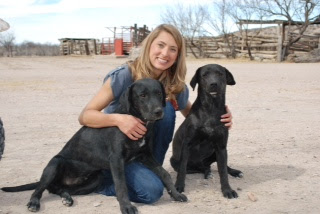

Let’s get down to the real topic at hand: cattle, agriculture and my life. Until I moved to the ranch in January of 2012 I had no previous experience or knowledge of ranch life. I grew up a city gal, lived in the suburbs of Denver, and enjoyed my morning Starbucks visits. Needless to say those days are long gone. The nearest city is an hour and a half away from us, we totally live of the grid, meaning we have no electricity and actually operate solely on a generator and batteries. Some folks might think that sounds scary, but it is actually not bad at all and things are quite normal. We even have the internet! We only run the generator at night so often times during the day we are without power, which is fine because if you know anything about ranch life there is plenty to do! Since day one of stepping foot on the ranch it has been an adventure! The whole reason I developed my blog was to more or less document my day-to-day life and to be able to share it with my friends and family. Not to mention I have taken a real knack for photography and use my blog to share some of my favorite pictures.


As I said our ranch is 15,000-acres and is located in north Mexico. We live in a desert climate that is very similar to west Texas or New Mexico. With that said, the drought that the States has been experiencing has also drastically effected us. We are going on year four of hardly any rain and things are bone dry. Before the drought began we had 800 female cows. That figure does not include the bulls, steers and female yearlings. However, over the last few years the drought has forced us to destock little by little.

My fiancé is the 5th generation to take over and manage the family ranch. The ranch has predominately been a cow calf operation. We export all of our yearling steers to the United States and keep all of our females as replacements. We put our females into production once they are two years old. We then sell our cull cows, which are usually not pregnant, old, or in rough condition, to a local butcher. We have a saying that once a mother cow does not get pregnant her time at the ranch is up, they must pay their rent and there is no free lunch here.

When my fiancés father got the ranch from his father nine years ago it was a bit of a mess. There were wild cows everywhere and no one knew how many animals were on the ranch. Not only were the cows wild there was no uniformity at all. The ranch had every breed imaginable, some cows with horns and some without. There were also 75 wild donkeys roaming the land. It took almost three years to get things cleaned up, cows herded, donkeys sold, ect. So our operation is fairly young under our management style.

We utilize Holistic Management, which is a decision making tool, and it has helped us turn things around rapidly. Over the last six years we have been focused on genetics, animal handling, pasture and land improvement, intensive pasture grazing and rotation, and fencing/dividing the ranch into several small paddocks. Holistic management has also helped us establish several goals and shapes our quality of life.


The breed we are focused on is Beefmasters. Beefmasters are a cross between Herefords, Brahman and Shorthorn. We have found that they are very heat tolerant and also a good meat-producing animal. Not to mention, I find them to be particularly adorable with their brown and white coloring. The calves are absolutely divine. We still have a mixed herd because we have used the animals the ranch inherited. We purchased a few Beefmaster females and bulls four years ago and through natural breeding our herd is becoming predominantly brown and white. Now all of our bulls are Beefmasters. We only keep them for four to five years. We find that bulls are most productive and effective when they are young.

Our rainy season is cyclical and dependent on storms in the Atlantic Ocean. Therefore, July thru September are usually our wettest months. We find that a pregnant cow needs the most nutrition two months before calving, which leads to the next topic. Our breeding season begins in November and lasts for 60 to 70 days. We separate the bulls from the ladies in January, then just like clockwork we can expect calving season to begin in August. This allows the mother cows to get the nutrition she requires in July and to be in great condition when she gives birth. We also time calving around the rainy season so there is plenty of grass and vegetation for the lactating mother. Our expectation is also that there is plenty of grass and feed for the calves to eat. We do not supplement or give feed to our animals they are strictly free-range animals.

We keep our bulls and steers separate from the female mother cows and heifers. We have five smaller pastures we use and rotate the bulls and steers on. We then have nine larger pastures we rotate the females on. As I mentioned fencing and separating the ranch into smaller paddocks is a huge goal and project for us. When we inherited the ranch there was only one fence that separated the mountain area from the flat land. I guess you could say there was two pastures. In the last six years we have divided the ranch into 14 paddocks, the five for the bulls, and the remaining nine for the females. Fencing is quite a task especially when the ground is rock hard. Our goal is to continue to divide and separate the pastures. Ideally we would like to have around 25 pastures. This will help with our management style and we can better utilize an intensive grazing and rotation system. We also find that having more pastures allows us to give parts of the ranch a break and they are able to rest and recover for longer periods of time. Needless to say, land management and improvements are also a big objective for us and we find fencing to be a great tool to help us achieve this. Or as my fiancé says, “Cows are the best bulldozers I know.” We also try to use animal impact from the cows to help us with land management and grass growth.

We really value and pride ourselves on calm animal handling practices in the corrals when we are working cattle and also when we are rounding up animals in pastures. We try not to yell and scream at the animals, because as those in the industry know, it does no good anyway. We also do not use lassos or ropes. We find that eliminating some of the old practices of roping an animal has really made our cows and herd calm and approachable. Over time this makes herding, roundups, and pasture rotations a lot easier. In fact, some times the cows just walk strait into the corrals with little struggle because we have eliminated the stressful aspects and experiences in the corrals as best as we can. We have doctors and veterinarians comment on how well our animals, herd, system, and animal practices are. Many of the vets love working with us because we are very efficient. This is also due to a very well thought out corral design. We find it to be much more effective, accurate and less traumatic to use a cattle chute and press when working cattle instead of roping the animals.

We do all of our dehorning, branding and castrating. Typically we wait until the animals are six months old and have been weaned before we start working them. Once again their health and condition determine the timing of the necessary steps. For example, this year we just finished weaning and branded the calves from the fall season. We will wait a while to dehorn and castrate because the condition of the land and grass supply is not great and the next three months will be the most difficult and we do not want to put any additional stress and strain on the animals.

On a relevant topic for some ranchers affected by the current drought, we have found it to be a blessing at the same time. With our grass supply and capacity of the ranch decreasing over time we have had to destock. We have used this opportunity to keep the best of the best. Our thoughts are that it will of course help us speed up our genetics and help us have a very strong, hardy, and heat tolerant herd in the future. Essentially you could say this is a “natural” selection process. We have gradually been selling all the old cows that are in poor condition, and did not have a calf. Ironically enough, the breed that seems to look the best and is repeatedly pregnant are the Beefmasters. This is great news because all of our old Charolais, Angus and Brangus, amoung other breeds, that we inherited with the ranch are disappearing.


Even though times are tough we have stuck to our guns and model when it comes to our operation. We have continued to export our yearling steers, sell our old mama cows and retired bulls, and have kept all of our female calves as replacements. We know several ranchers in our area that have not been so luckily and have had to destock and sell almost their whole herd. Including their female replacements. In my opinion this is very scary for the future of the cattle industry because cattle prices will be too expensive in years to come for ranchers to buy back heifers and establish a herd again and that’s if there is any cattle available.

Fortunately because of our management style, we did not have to start selling at the first sign of the drought. We actually had enough grass and reserves to host the herd for a while and we continue to have enough natural grass to host our current herd of 220 mother cows. We have tried to be very conservative and conscious on the capacity of the land and to make sure we are not keeping too many animals and that there is enough grass for the animals to be comfortable and meet their nutrition requirements. 

One last comment about the drought that I find interesting and maybe those in the industry might be able to relate or learn from, is how the price of beef and sticking to our model has really helped us financially. We have been able to stay afloat in these difficult times and actually reinvest in a few winter ranch improvements. What I mean by all of this is that we have not seen a huge financial burden during the current drought because we have been able to sell our cattle at record prices. As most know cattle prices are almost double what they were two or three years ago. Therefore, we have continued to see a steady source of income from our exported steers, and selling our old cows and retired bulls to a local butcher at outstanding prices. In fact we just sold 30 animals last week to our butcher and he is already begging us for more animals. There are no cows left in our region and our animals, considering the tough times, are in great shape. Not only have we profited during this tough time, we have kept our animal count and inventory steady. We also have replacements for all of the old cows we are selling. Thus, we have not had to see a huge decrease or loss in our herd. The only loss has been planned and we consider it to be “destocking.” Plus, we will not be struggling to find heifers in the future when times get better. Great management practices and planning for natural disasters and to credit for this!

That is more or less our cattle operation summed up. I briefly wanted to talk about our lifestyle and upcoming projects. Like I mentioned holism has become a life style for us and we really value our quality of life on the ranch. Therefore, we have a large garden and grow most of our own vegetables when the seasons allow. Once again, gardening was a totally new concept for me, but I quickly got the hang of it. You name the vegetable and we grow it, have grown it, or have tried to grow it. Desert gardening can be a little tricky and you really have to plan things out and plant them at exact times because there are three months during the summer that it is to hot to grow anything except for melons and squash.

Some of you might be wondering how the heck we can grow anything in the desert. Luckily, there is no shortage of manure around here and we also compost and have a large worm “farm.” We have a large bed lined with plastic and filled with corral dirt that we cultivate earth worms in. We also use the bed to burry our compost. We then put the worms into our garden beds and also collect some of the liquid moisture the bed collects and use it as fertilizer. This project has been very helpful and successful for us.

Last year I even gave canning a shot, which was once again a first, and a total success! We made some incredible dill pickles, hot peppers, salsa, marinara pasta sauce, and a tomato broth that I use to make Spanish rice. Cooking is also one of my passions and the guys at the ranch are very grateful for my skills. We have planned this year’s garden around some of our favorite canning recipes and experiments from last year. I also grow all of my own herbs that I use for canning. Last year I had more dill than I knew what to do with. In fact, I tried drying it in one of our bedrooms and the poor room still smells like dill!


A ranch, or farm, would not be complete without chickens or dogs. I absolutely love chickens and often joke that I am the mother hen around the ranch. We currently have 27 chickens and continue to expand our flock. We are interested in selling the eggs to a local store to continue to supplement our income and help us live of the land as best as possible. I also have three black labs that I refer to as, “The Boys.” Their real names are Wrangler, Stetson, and Levi. A ranch dog had a litter of puppies last summer and I kept three of the males. We also have a family yellow lab named Max and he is the father of the boys. So it is never a dull moment around the ranch with four dogs.

One final project that is in the making is an orchard, vineyard, and larger garden. With the current drought it has really forced us to think outside the box and brainstorm other ways we can continue to diversify ourselves and continue to be fully self supporting and sufficient. Therefore, we recently cleared an acre of land and just planted 34 different fruit trees. It is more or less of a pilot to see what desert fruits do the best. We planted figs, pomegranates, apples, pears, apricots, peaches, quinces, and even a pecan and olive tree. In the same area of land we will be planting seasonal vegetables that do well in the area. Our ambition is to sell our produce to a local market. In fact, we will be planting 1,000 sweet corn plants next week. We are very excited and look forward to the results of the plants and what does.


Like I said, I am new to this lifestyle and one thing is for sure, I would not trade it for anything in this world. I am very grateful the family has let me get my hands as dirty as I want and has been very patient and encouraging of my involvement. I adore every minute on the ranch from collecting fresh eggs to helping the guys in the corrals to gardening and everything in between. The serenity, simplicity, and genuine life I have found at the ranch is one that I can not describe. The morals, values and lessons you have the chance and opportunity to experience are so precious. I speak for my family and myself when I say we treasure our life on the ranch and love working together. We would not trade it even in the toughest of times because we love the freedom it gives us. At the end of the day we are solely responsible for the consequences of our choices and decisions. Anyone that knows a thing or two about ranch life knows there are good times and bad times, mistakes and triumphs, highs and lows but we are accountable and remain open minded and learn from all experiences. My family and I work hard to persistently improve our livestock, land, and quality of life because we cherish and take great pride in them and want to make sure the ranch and its future is around and in good hands for years to come.

Thank you Alyssa for telling us about your life!!! You can follow her story on her blog "Love Crosses Borders" - and Like her on Facebook!

Do you suddenly find yourself on the farm and ranch? What is your story? Contact us today on how you can be the next FOA feature!